




![[Translate to English:]](/media/31/d1/13/1791125160/kw-Icons_black_Ansprechpartner.svg "[Translate to English:]")
![[Translate to English:]](/media/c8/64/45/1791125164/kw-Icons_black_Karriere.svg "[Translate to English:]")
![[Translate to English:]](/media/a3/8b/9f/1791125163/kw-Icons_black_Daten_und_Fakten.svg "[Translate to English:]")
![[Translate to English:]](/media/25/45/7f/1791125164/kw-Icons_black_Historie.svg "[Translate to English:]")
![[Translate to English:]](/media/c8/67/bf/1791125161/kw-Icons_black_Fachbeitraege.svg "[Translate to English:]")
![[Translate to English:]](/media/3b/90/23/1791128020/kw-Icons_black_Katalog_Flyer.svg "[Translate to English:]")
![[Translate to English:]](/media/f2/82/91/1791125161/kw-Icons_black_Betriebsanleitung.svg "[Translate to English:]")
![[Translate to English:]](/media/74/31/5a/1791125161/kw-Icons_black_SAPA.svg "[Translate to English:]")


 +49 8053 2029-0

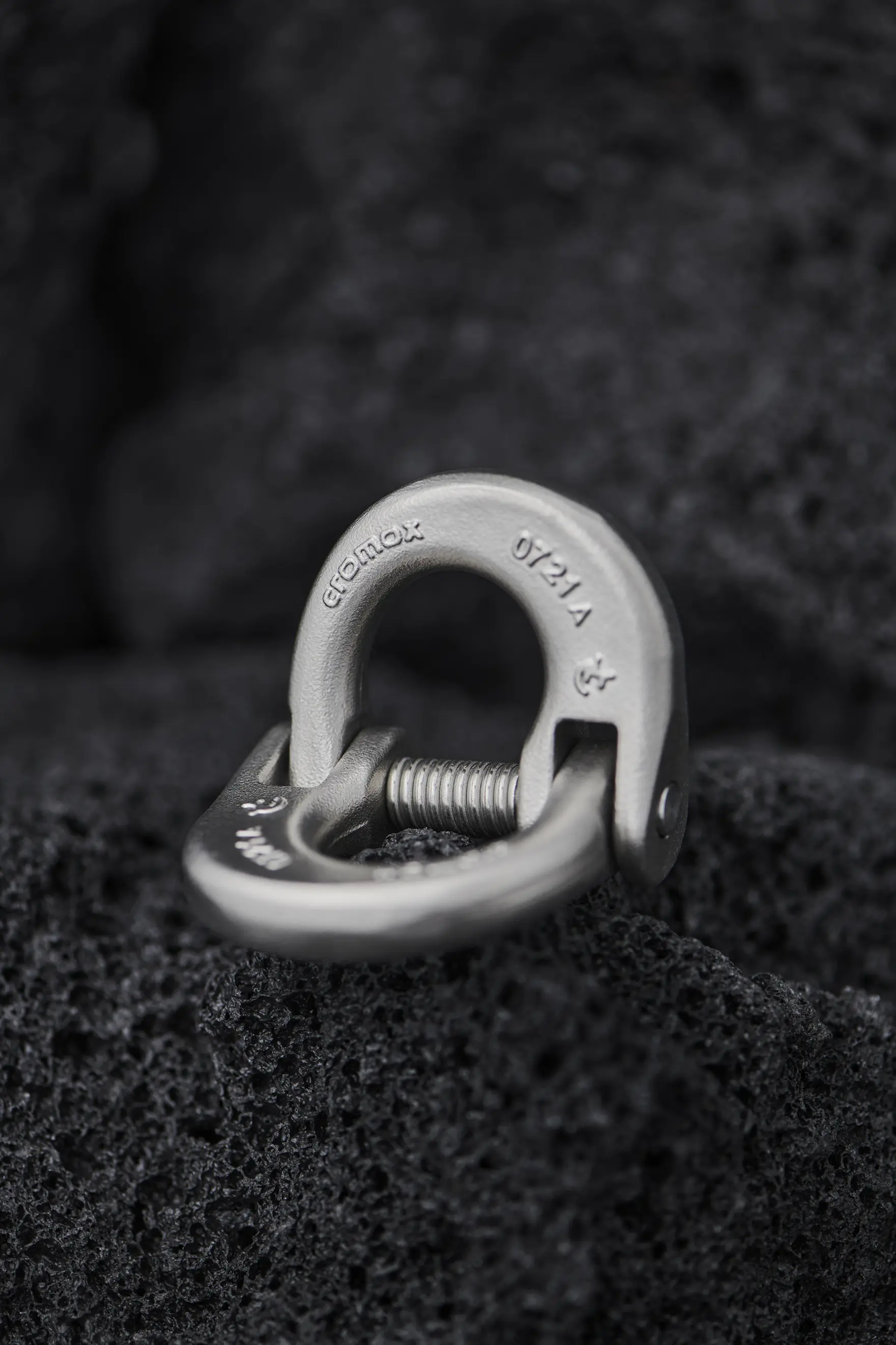
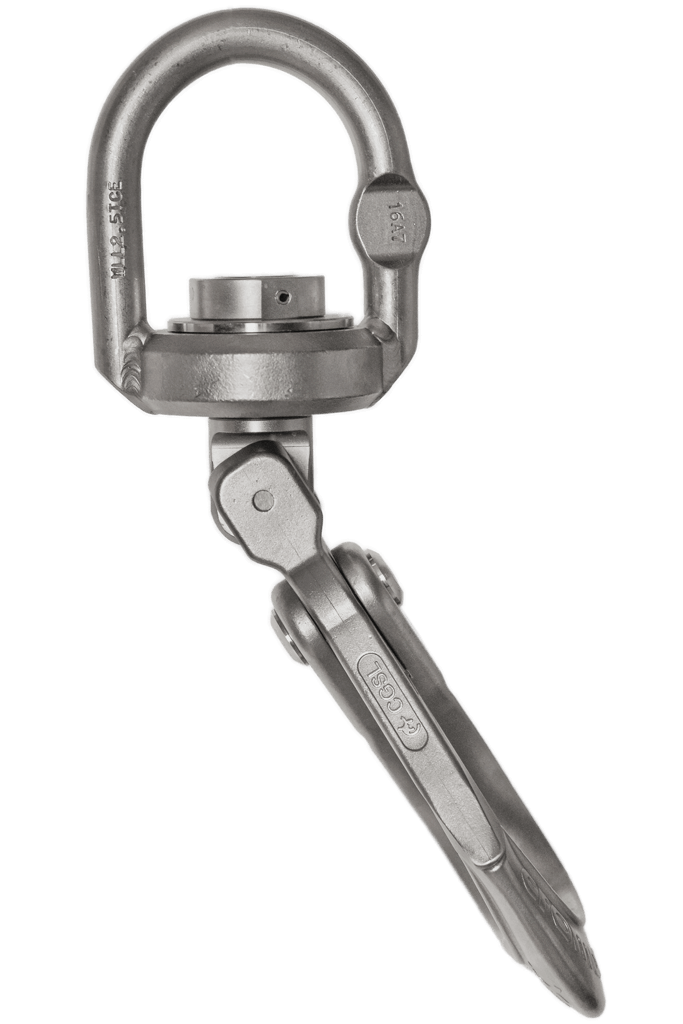
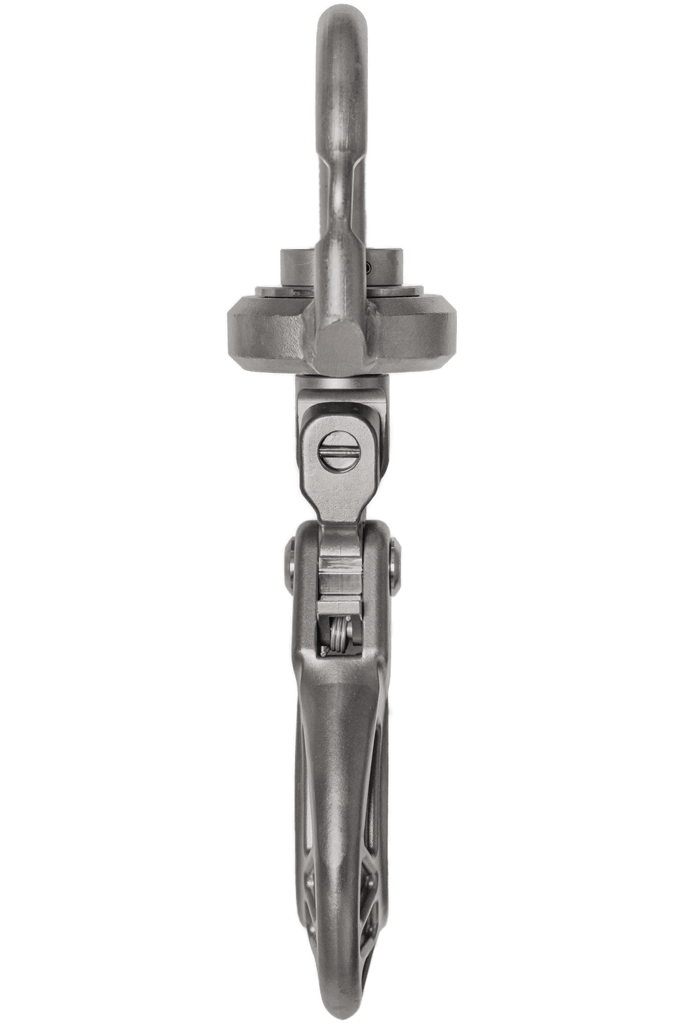
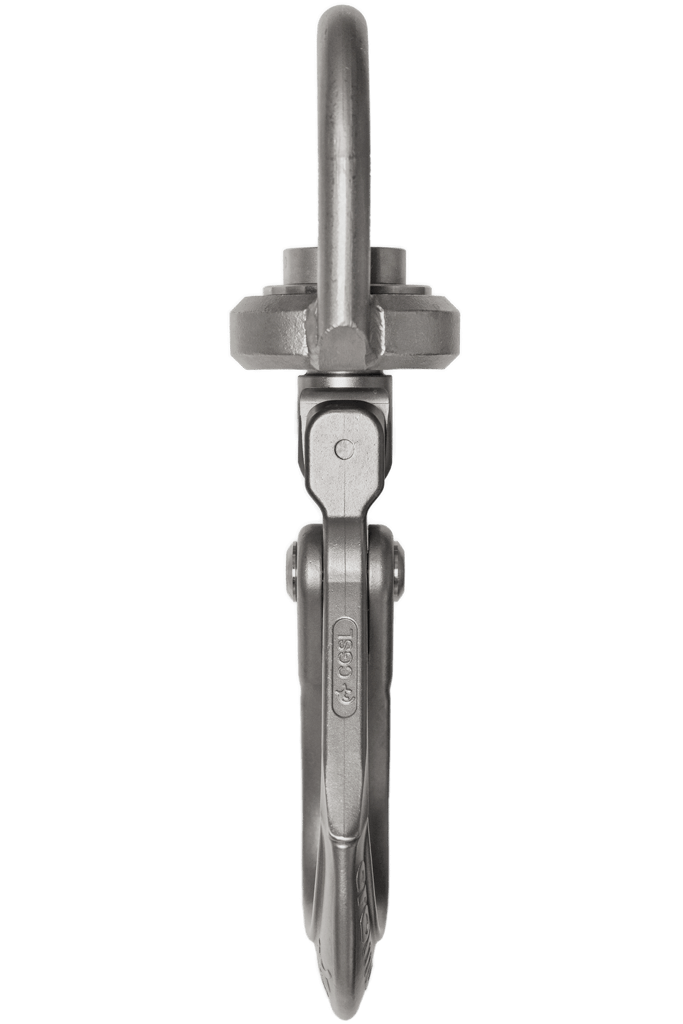
Why cromox® connecting links from Ketten Wälder GmbH?
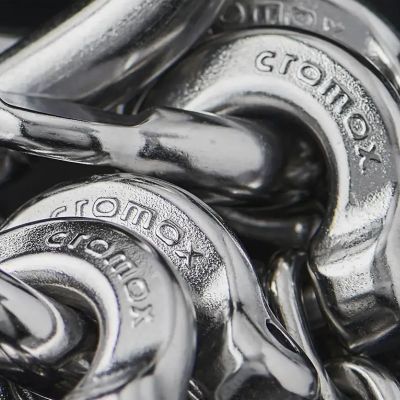
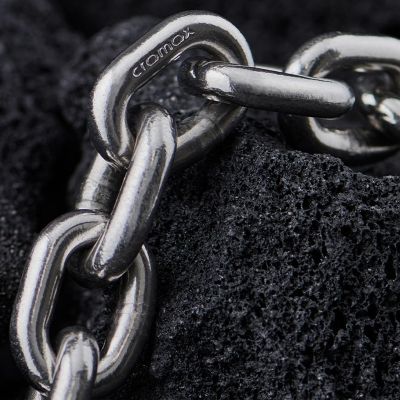
cromox® products are manufactured by Ketten Wälder GmbH in Germany using the highest quality of corrosion resistant raw materials. They select the highest and purest materials and manufacture all our products on the most modern machinery.
The cromox® range of products use the highest levels of design, materials and manufacturing processes to produce the best performing products for use in the harshest environments. cromox® is durable and with controlled levels of chromium and nickel it produces a passive layer of chromium oxide that increases the corrosion resistance.
Our stringent testing procedures ensure our products are manufactured to the highest quality. This makes us the market leaders in product development for stainless steel lifting products. Ketten Wälder GmbH are Lloyds Register approved manufacturers and associate members of LEEA.
Benefit I: Corrosion resistance
A key advantage of cromox® connecting links is their exceptional corrosion resistance.
Manufactured from high quality stainless steel, they ensure durability and reliability even in the harshest corrosive environments. cromox® corrosion-resistant products will reduce your maintenance costs and downtime. The use of stainless steel for cromox® connecting links not only ensures corrosion resistance, but also a high load-bearing capacity for each chain sling.
Benefit II: Load capacity
An advantage of cromox® connecting links is the high load-bearing capacity. They are designed to provide safe and efficient performance even under extreme loads and in harsh environments, making them an ideal choice for a variety of lifting operations. cromox® connecting links have excellent load bearing capacity and fit effectively with chain hoists, chain slings and many other lifting devices.
Our range of connecting links
Our range of cromox® connecting links for chains and other components is made from the highest-quality stainless steel, also known as inox steel (from the French "inoxydable", meaning "non-corrosive" or "rust-free"). This combined with accurate workmanship and the in-house quality assurance systems at Ketten Wälder GmbH result in high-quality, corrosion-resistant products. Each product is tested In our in-house, Lloyd's Register-certified test laboratory. Each individual stainless steel connecting link is subjected to tests to check and ensure its load-bearing capacity meets the standard guidelines.


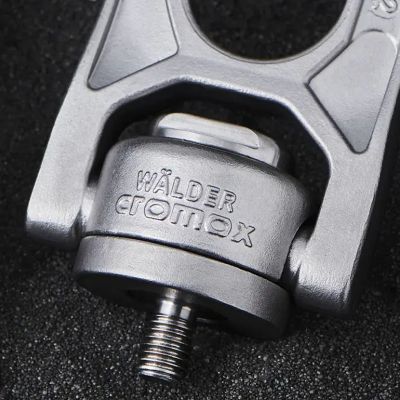
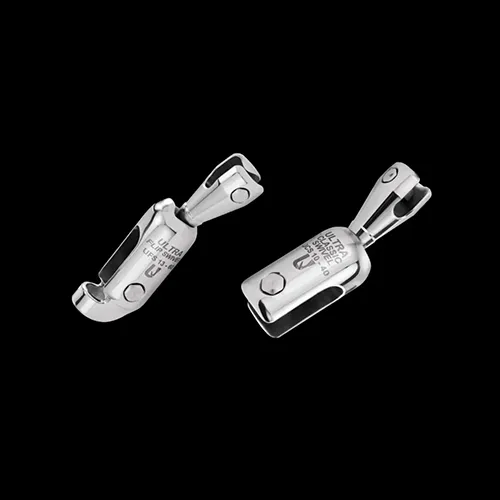
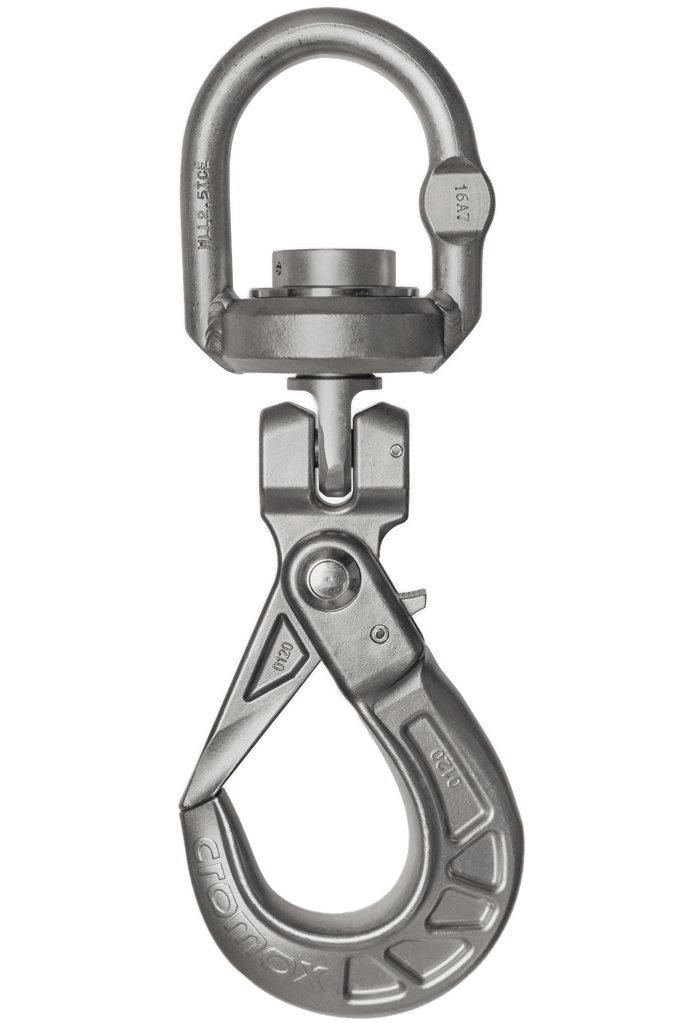
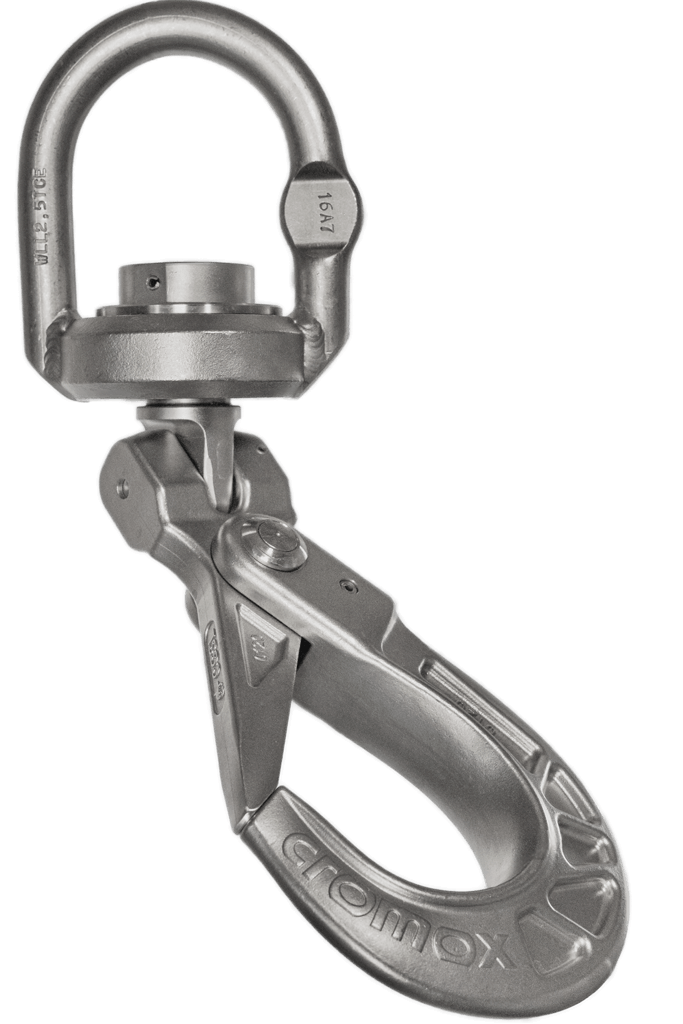
The cromox® stainless steel Rotoconnect connecting component (inox) is available with a bail loop or split swivel unit.
The stainless steel ball bearings in cromox® Rotoconnect products enable the hook to rotate under full load.
The number of combinations available allow the cromox® stainless steel Rotoconnect to be highly flexible.
Complex lift operations benefit from the flexibility and the load-bearing capacity.
| Type | WLL (t) | Dimensions (mm) | Weight (kg, approx.) | combinable with | |||
|---|---|---|---|---|---|---|---|
| b | d | t | |||||
| CRCB-04 | 0,40 | 40 | 10 | 71,5 | 0,300 | CGS-04 | CGHF-04 | 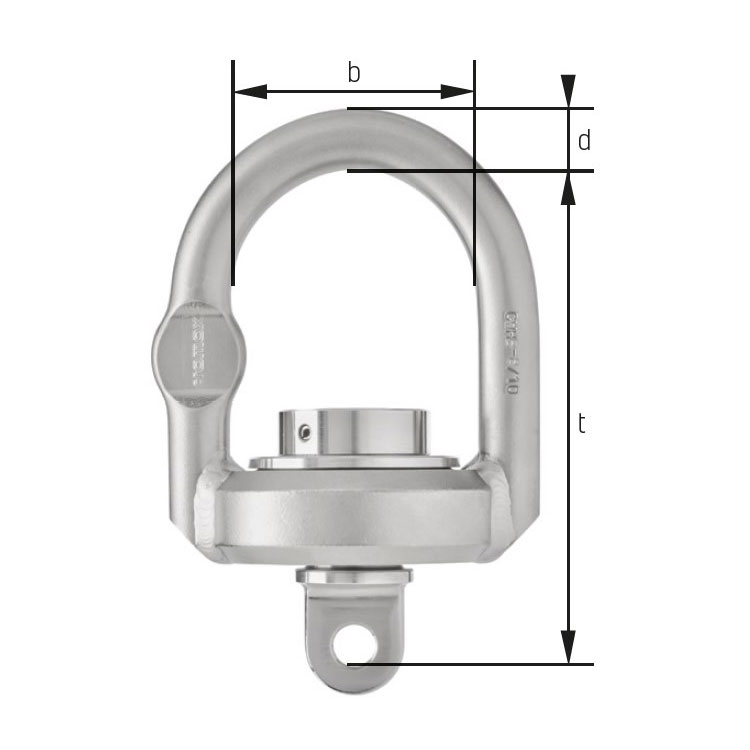 |
| CRCB-05 | 0,63 | 40 | 10 | 75,5 | 0,300 | CGHF-05 | CGS-05 | CGSL-05 | |
| CRCB-06 | 0,90 | 49 | 13 | 113,0 | 0,660 | CGHF-06 | CGS-06 | CGSL-06 | |
| CRCB-07 | 1,25 | 49 | 13 | 117,0 | 0,660 | CGHF-07 | CGS-07 | CGSL-07 | |
| CRCB-08 | 1,55 | 64 | 16 | 126,5 | 1,350 | CGHF-08 | CGS-08 | CGSL-08 | |
| CRCB-10 | 2,45 | 64 | 16 | 130,5 | 1,350 | CGHF-10 | CGS-10 | CGSL-10 | |
| Type | WLL (t) | Dimensions (mm) | Weight (kg, approx.) | combinable with | |
|---|---|---|---|---|---|
| t | |||||
| CRCF-04 | 0,40 | 44,0 | 0,270 | CGS-04 | CGHF-04 | 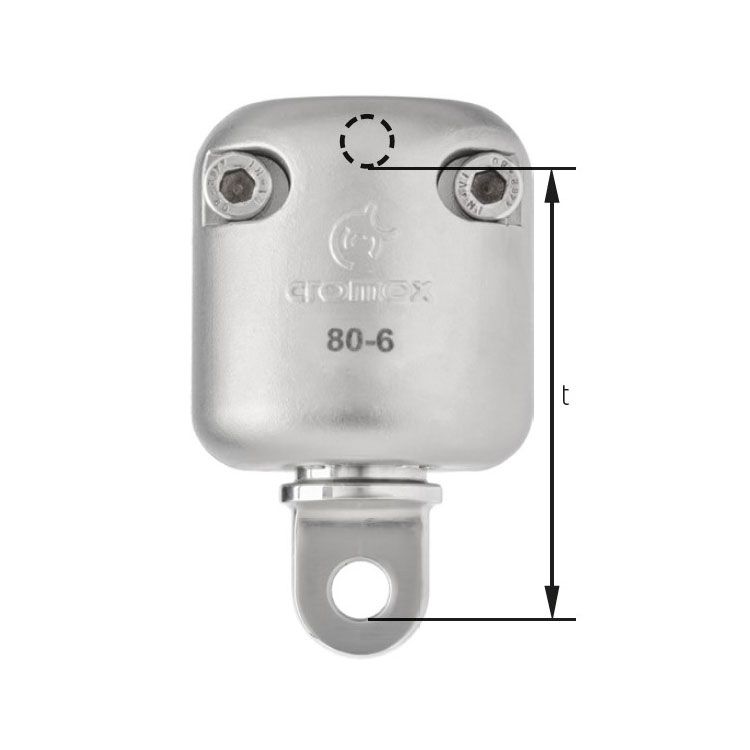 |
| CRCF-05 | 0,63 | 48,0 | 0,270 | CGHF-05 | CGS-05 | CGSL-05 | |
| CRCF-06 | 0,90 | 58,5 | 0,740 | CGHF-06 | CGS-06 | CGSL-06 | |
| CRCF-07 | 1,25 | 63,0 | 0,740 | CGHF-07 | CGS-07 | CGSL-07 | |
| CRCF-08 | 1,55 | 79,5 | 1,500 | CGHF-08 | CGS-08 | CGSL-08 |
| Type | WLL (t) | Dimensions (mm) | Weight (kg, approx.) | combinable with |  | ||
|---|---|---|---|---|---|---|---|
| b | d | t | |||||
| CRCBV-05 | 0,63 | 40 | 10 | 76 | 0,300 | CVG | CAG/CBG | CAK | 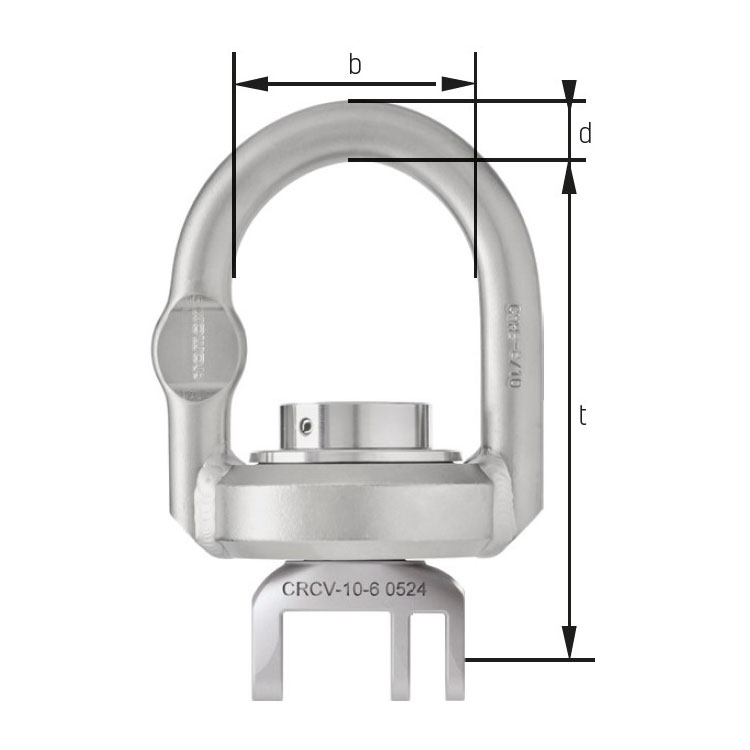 |
| CRCBV-06 | 0,90 | 49 | 13 | 113 | 0,700 | CVG | CAG/CBG | CAK | |
| CRCBV-07 | 1,25 | 49 | 13 | 113 | 0,700 | CVG | CAG/CBG | CAK | |
| CRCBV-08 | 1,55 | 64 | 16 | 127 | 1,300 | CVG | CAG/CBG | CAK | CRSV | |
| CRCBV-10 | 2,45 | 64 | 16 | 131 | 1,350 | CVG | CAG/CBG | CAK | CRSV | |
| Type | WLL (t) | Dimensions (mm) | Weight (kg, approx.) | combinable with | |
|---|---|---|---|---|---|
| t | |||||
| CRCFV-05 | 0,63 | 46,0 | 0,280 | CVG | CAG/CBG | CAK | 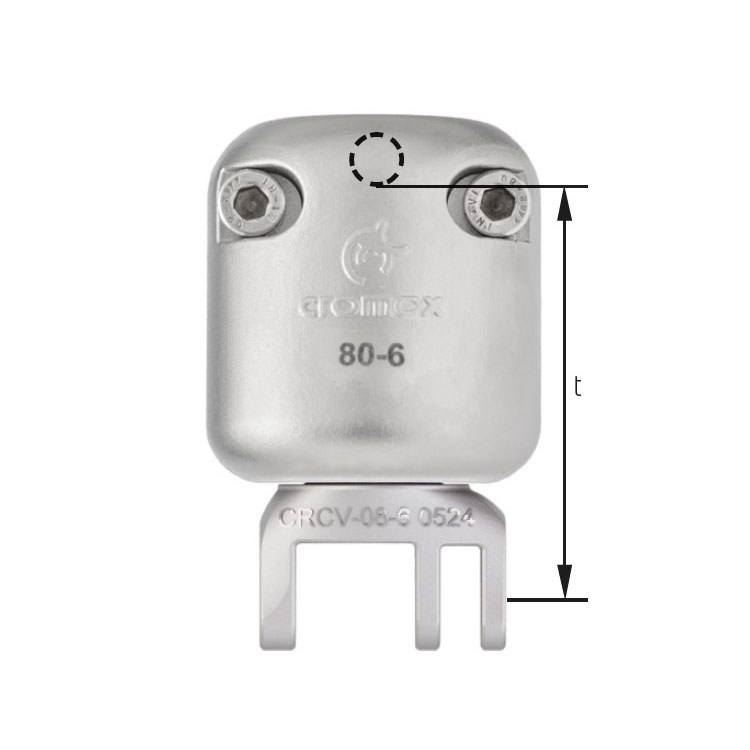 |
| CRCFV-06 | 0,90 | 58,5 | 0,700 | CVG | CAG/CBG | CAK | |
| CRCFV-07 | 1,25 | 58,5 | 0,700 | CVG | CAG/CBG | CAK | |
| CRCFV-08 | 1,55 | 79,5 | 1,500 | CVG | CAG/CBG | CAK | CRSV | |
| CRCFV-10 | 2,45 | 81,5 | 1,500 | CVG | CAG/CBG | CAK | CRSV |
| Type | WLL (t) | Dimensions (mm) | Weight (kg, approx.) | ||||
|---|---|---|---|---|---|---|---|
| t | f | a | |||||
| CVG-05 | 0,63 | 33 | 12 | 7,0 | 0,045 | 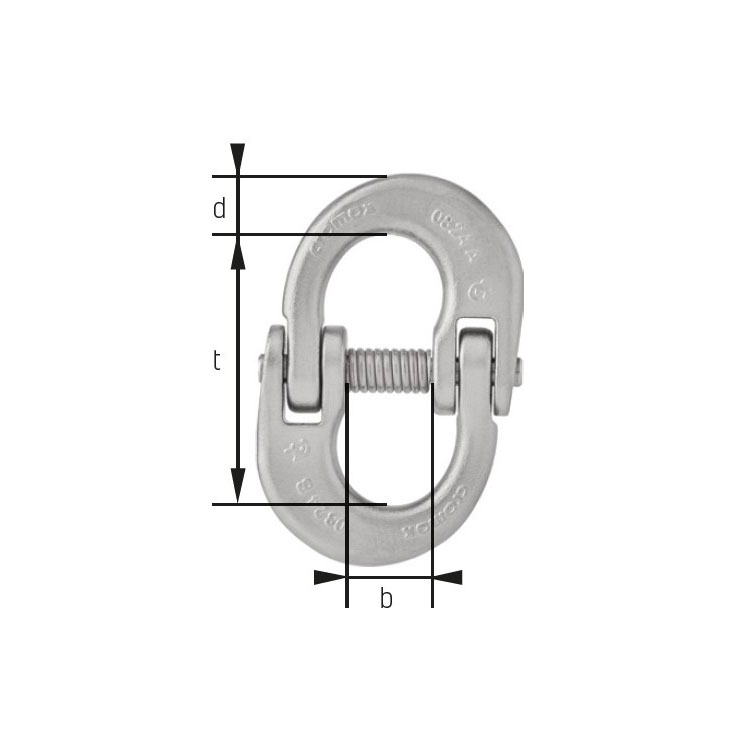 | |
| CVG-06 | 0,90 | 42 | 15 | 7,5 | 0,085 | ||
| CVG-07 | 1,25 | 42 | 15 | 9,5 | 0,090 | ||
| CVG-08 | 1,55 | 55 | 18 | 11,5 | 0,150 | ||
| CVG-10 | 2,45 | 69 | 22 | 14,5 | 0,310 | ||
| CVG-13 | 3,85 | 75 | 29 | 15,0 | 0,600 | ||
| CVG-16 | 6,00 | 92 | 36 | 18,5 | 0,980 | ||
| CVG-18 | 8,00 | 105 | 41 | 27,1 | 1,680 |  | |
| Type | WLL (t) | Dimensions (mm) | Weight (kg, approx.) | combinable with | |
|---|---|---|---|---|---|
| t | |||||
| CWHD-05 | 0,63 | 90 | 0,450 | CGHF-05 l CGS-05 l CGSL-05 l CVG-05 | 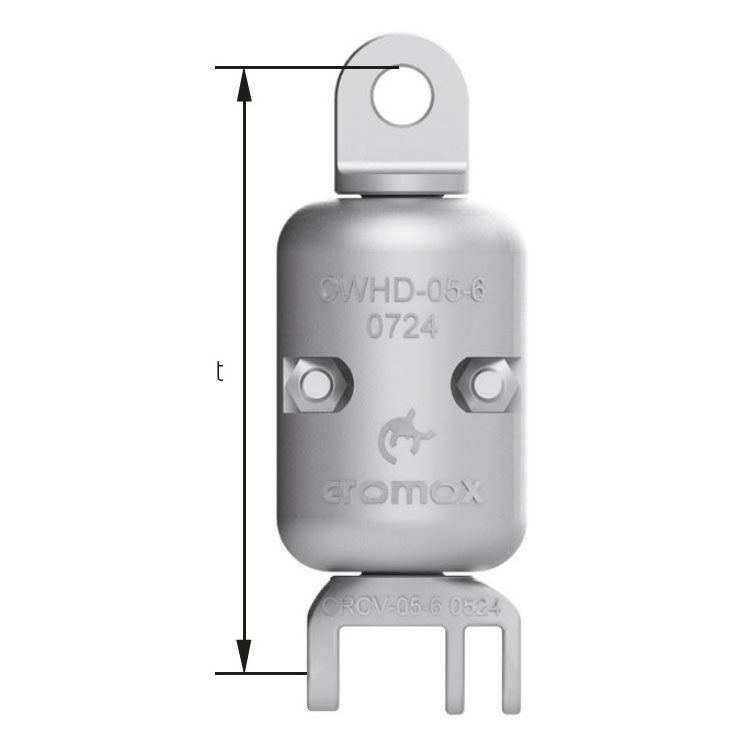 |
| Material CWHD | ||
|---|---|---|
| CRC/CRCV | AISI 318LN Duplex | |
| Half shells | AISI 318LN Duplex | |
| Nut | AISI 318LN Duplex | |
| Safety pin | AISI 301 | |
| Ball bearings | AISI 440C | |
| Screws/nuts | AISI 316L | |
| Type | WLL (t) | Dimensions (mm) | Weight (kg, approx.) | | ||
|---|---|---|---|---|---|---|
| t | f | a | ||||
| CRSV-08 | 1,55 | 37 | 30 | 15,0 | 0,320 | 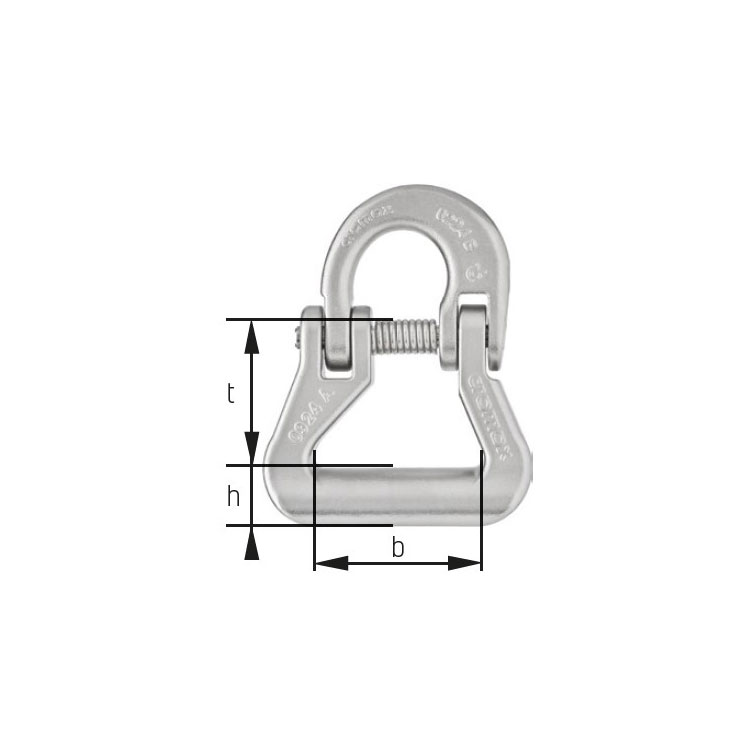 |
| CRSV-10 | 2,45 | 45 | 35 | 18,0 | 0,560 | |
| CRSV-13 | 3,85 | 59 | 47 | 23,8 | 1,230 | |
| Type | WLL (t) | Dimensions (mm) | Wrench size | | |||
|---|---|---|---|---|---|---|---|
| b | d | t1 | t2 | ||||
| CTB-08 | 1,55 | 9 | 10 | 170 | 194 | 24 | 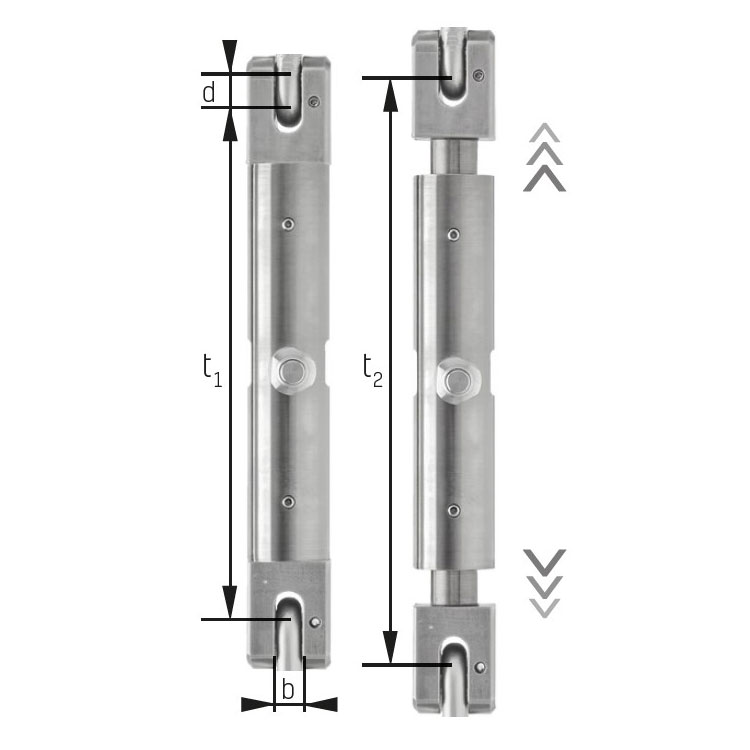 |
What are connecting links?
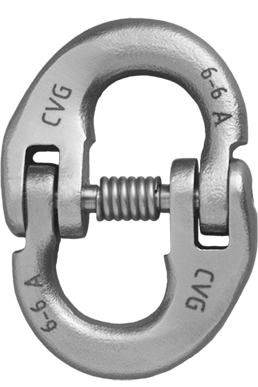
Connecting links are used to join components and chains to form an assembly for lifting purposes. Examples of this could be joining chain links, shackles, hooks, master links, lifting eyes, pump chains and hoisting or other components. Connecting links are supplied in two halves with a securing pin and spring.
Which industries are connecting links used in?
Stainless steel connecting links are used in many different applications, especially where corrosion resistance, hygiene and aesthetics are important. The versatility and load-bearing capacity of stainless steel connecting links make them ideal for many industrial applications. Some areas of use are:
- Marine and shipping:
Due to corrosion resistance to salt water, stainless steel connecting links are highly suitable for anchor chains, rigging and assemblies on ships and boats. - Food and beverage industry:
In food processing and manufacturing, stainless steel connecting links are used because of their ease of cleaning and resistance to cleaning chemicals and to prevent contamination normally associated to carbon steel products. - Architecture and construction:
Stainless steel is used for decorative and structural purposes, such as in railings, façade fixings, suspension systems and as load-bearing elements in glass façades and structures. - Medical devices:
In medical equipment , stainless steel connecting links are used because of their ability to be sterilized and prevent contamination. An additional benefit is their resistance to corrosion. - Other industrial applications:
In manufacturing and automation (including in machinery), stainless steel connecting links are used to connect parts. - Waste water treatment:
Stainless steel connecting links are used in sewage treatment plants and water treatment plants because of their resistance to corrosive environments and in fresh water supply their resistance to contaminate. - Petrochemical industry:
Stainless steel connecting links can be used in areas where there are high levels of aggressive substances. - Transport industry:
In the aviation, rail and automotive industries, stainless steel connecting links are used for a variety of purposes where resistance to corrosion is a benefit.
This list can be extended as stainless steel fasteners can be used in many other areas, depending on the need for durability, corrosion resistance and hygiene.
What is the difference between a connecting link with a bracket and one with a half shell? What are they used for?
The main difference between a connecting link with bracket and a connecting link with half shell lies in their design and intended use. They are used in various industrial applications, depending on the specific requirements for safety, flexibility and load-bearing capacity. Both connecting links enable a flexible connection that is easy to handle and can be attached or removed quickly. A connecting link with bracket provides additional stability and load-bearing capacity for lifting and connecting loads thanks to the continuous, closed connection.
What are connecting links used for in chain slings?
Connecting links are used to connect chains, hooks and lifting components within chain slings and lifting assemblies. They create a secure connection between individual components and ensure safe load handling in industrial lifting applications.
Why choose stainless steel connecting links for lifting operations?
Stainless steel connecting links offer excellent corrosion resistance, high durability and reliable load-bearing performance. They are particularly suitable for lifting operations in corrosive environments where conventional lifting components may be affected by rust or environmental exposure.
What is the cromox® Rotoconnect?
The cromox® Rotoconnect is a rotating connecting component available with either a bail loop or a split swivel unit. Its stainless steel ball bearing allows rotation under full load, making it ideal for complex lifting operations that require flexibility and controlled load positioning.
What are the benefits of rotating connecting links in lifting applications?
Rotating connecting links help reduce twisting forces within lifting assemblies and allow components to align more naturally under load. This improves flexibility during lifting operations and supports safer load handling in demanding applications.
cromox® stainless steel connecting links – durable and resilient
When it comes to lifting heavy loads in the harshest of environments cromox® stainless steel connecting links are a real benefit. Their high load-bearing capacity and durability make them a natural choice for the safe lifting and moving of loads. The robust properties of our connecting links, including their load-bearing capacity and durability, make them a cornerstone for safely lifting and transporting loads.